
The mould argument has a one-sentence answer
In short
In Victoria, mould or damp caused by or related to the building structure is the rental provider's responsibility. Consumer Affairs Victoria lists it as an urgent repair, which must be fixed immediately, and freedom from it is one of the 15 minimum standards a rental property must meet. Mould from condensation and everyday living is not on that list. But adequate ventilation is a separate minimum standard, and a property that does not meet a minimum standard is itself on the urgent repairs list, so a bathroom without adequate ventilation is the property failing, and it is urgent. From 13 October 2026, rental providers must be able to show records that the property met the standards.
Is mould the rental provider's problem or the renter's?
It depends on one phrase, and the phrase appears in two places in Victorian law.
The minimum standards, published by Consumer Affairs Victoria, require that all rooms be free from mould and damp caused by or related to the building structure. The urgent repairs list, on the same agency's site, includes mould or damp caused by or related to the building structure. Same words, both times. That is the line, and almost every mould argument is two people standing on opposite sides of it without knowing it exists.
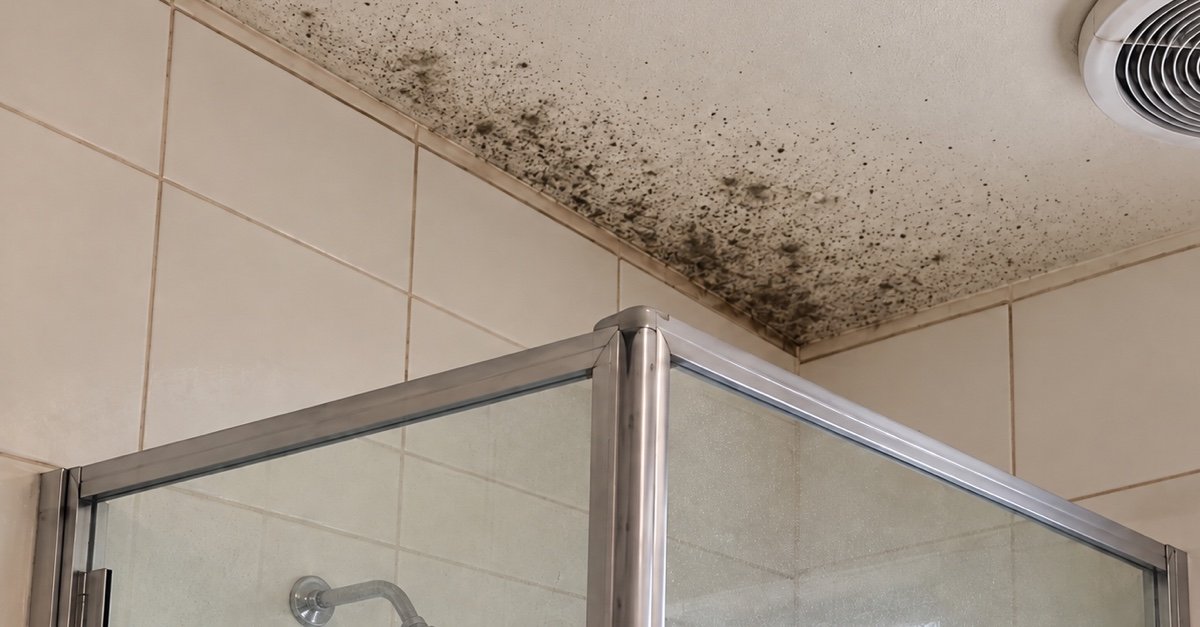
If the mould comes from the building — a roof leak, a failed damp course, water coming through a wall, a pipe weeping behind the tiles — it is the rental provider's, and it is urgent. If it comes from how the property is lived in — washing dried indoors with the windows shut, a shower with the fan never switched on — it is on neither list.
What does "caused by or related to the building structure" actually mean?
It means the source of the water, not the location of the mould.
Mould on a bedroom ceiling under a valley in the roof is structural. Mould in the corner of a bathroom that has a working fan and gets used is almost never structural. Mould along the bottom of an external wall on the south side of the house, with the paint lifting, is usually damp coming through the wall, and that is structural. The question to ask is where the moisture is entering, not where the black spots are.
One caution. The law says "caused by or related to" the building structure, and "related to" is the phrase disputes turn on. A home that cannot be ventilated, or is so poorly built that condensation is unavoidable however it is lived in, can bring what looks like lifestyle mould back onto the structure side of the line. The line is real, but it is not always where a rental provider would like it to be.
Is mould an urgent repair in Victoria?
Structural mould is, yes. Consumer Affairs Victoria's list of urgent repairs includes "any fault or damage in the property that makes it unsafe or insecure, including pests, mould or damp caused by or related to the building structure", and rental providers must make urgent repairs immediately. Non-urgent repairs must be made within 14 days of a written request. Serious roof leaks and burst water services are also on the urgent list, and they are usually the cause of the mould in the first place.
There is a second item on that list worth knowing: "the property does not meet minimum standards" is itself legally defined as an urgent repair. So a failure of any of the 15 standards, not only mould and damp, carries the same immediate timeframe.
So the practical sequence is: find the water source, decide which side of the line it sits on, and act on the timeframe that follows. Mould that is not structural has no urgent-repair timeframe attached to it, and no minimum-standards failure behind it.
What about ventilation — isn't that separate?
Yes, and it is the part almost nobody quotes.
Adequate ventilation is a minimum standard in its own right. Consumer Affairs Victoria requires it in all habitable rooms, including the bathroom, shower, toilet and laundry, to the Building Code of Australia. A wet room with no working exhaust fan and no opening window fails that standard regardless of who caused the mould on the ceiling, and because a property that does not meet minimum standards is on the urgent repairs list, that failure is urgent too.
This is where the "it's just the tenant's condensation" argument usually collapses. If the room cannot ventilate, the condensation is a symptom of the property, not the renter.
What is happeningWhose obligationRepair classTimeframeRoof leak, wall ingress, failed damp course, pipe leaking behind a wallRental providerUrgentImmediatelyMould or damp from any of the aboveRental providerUrgentImmediatelyBathroom, laundry or kitchen with no adequate ventilationRental providerMinimum standard failure, which is on the urgent listImmediately; on file from 13 October 2026Condensation mould from drying washing indoors, windows shut, fan not used, in a room that can ventilateNot on the urgent list; not what the mould and damp standard describes——
What should be on file before 13 October?
From 13 October 2026, rental providers must keep records sufficient to show the property was compliant with the minimum standards. That is a Consumer Affairs Victoria obligation, not a suggestion.
For mould and damp, a sufficient record answers two questions with a date and a photograph: is there any mould or damp related to the building structure, and does every wet room ventilate. Both are answerable on site in an afternoon.
We do not remediate mould and we do not want that job. Structural repairs are a builder's or plumber's; a new exhaust fan is an electrician's, and the certificate comes from them. What Safehaus does is assess the property against all 15 standards, photograph what it finds, and give you a dated written record. That record can form part of your file. It is not a certificate, and it does not make a property compliant. If the property is already fine, the report will say so and you will have spent $195 finding out.
Rental Essentials Check — $195 A walk through all 15 minimum standards, including mould, damp and ventilation, with a dated written record and photographs for your file. safehaus.com.au/rental-essentials-check
Sources
Rental properties — minimum standards, Consumer Affairs Victoria — the mould and damp standard, the ventilation standard, and the count of 15 categories. Checked 15 September 2026.
Repairs in rental properties, Consumer Affairs Victoria — the urgent repairs list including structural mould and damp, "immediately" for urgent and 14 days for non-urgent. Checked 15 September 2026.
New changes to the rental laws, Consumer Affairs Victoria — the 13 October 2026 records obligation and the 25 November 2025 rule that standards are met before advertising.
