
The fence they climb is the one nobody's watching
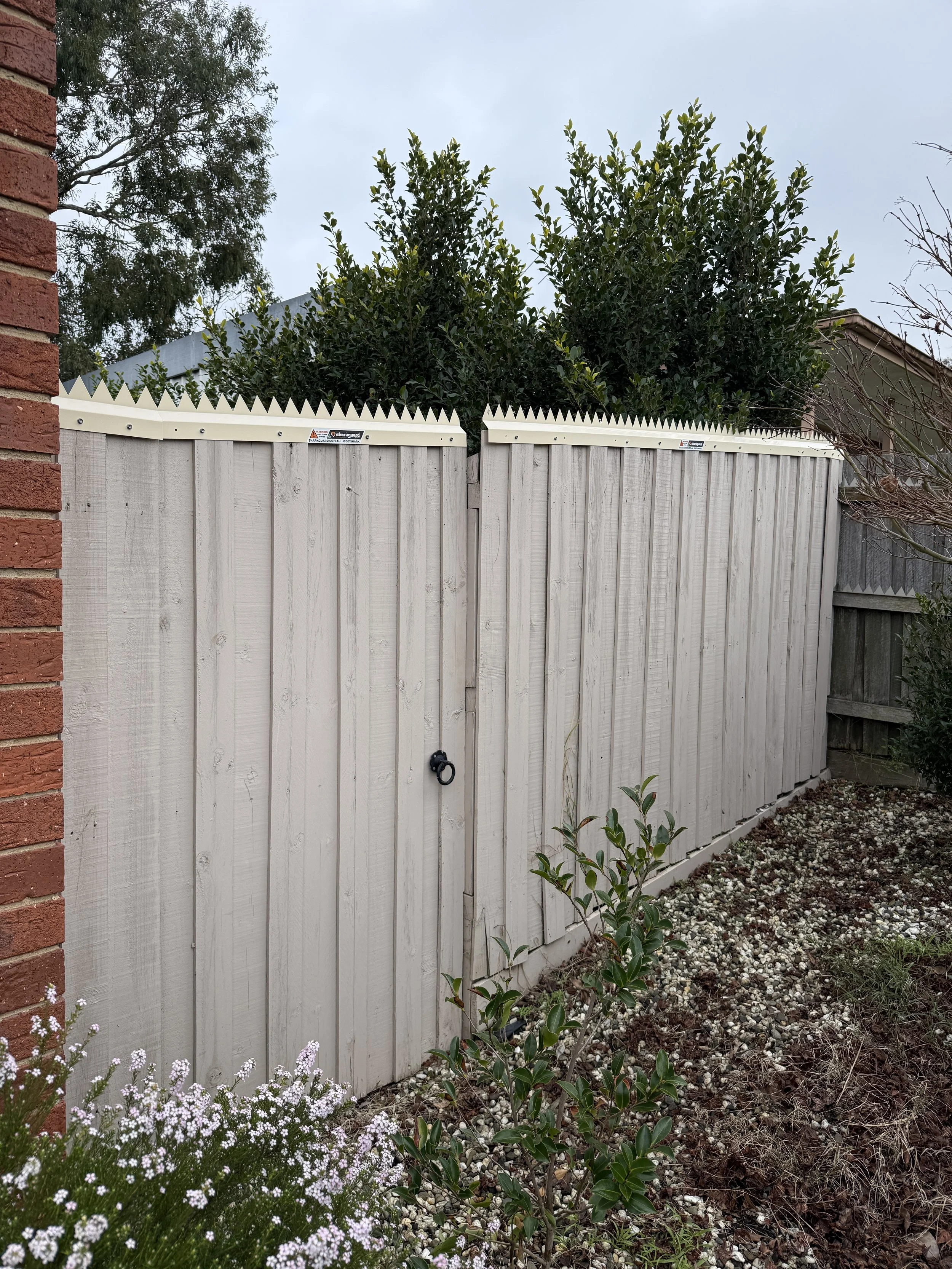
The back of a property is the most common way into a Victorian home. When the Crime Statistics Agency looked at point of entry (April 2014 to March 2015), 24.4% of residential burglaries came through the back, compared with 19.9% through the front. Anti-climb spikes turn the back fence from an easy step over into slow, awkward work, and that's usually all it takes for someone to move on. We fit them across Melbourne from $149, with signs included and quotes from a photo.
Where do break-ins actually start?
At the back. The Crime Statistics Agency's residential burglary study, covering April 2014 to March 2015, found offenders were most likely to enter through the back of a property: 24.4% of offences, against 19.9% through the front.
Timing matters too. In the same data, 52.1% of residential burglaries happened between 9am and 6pm, while most people are at work.
The good news is that it's trending the right way. Burglaries and break-ins in Victoria fell almost 20% in the year to June 2026, according to the Crime Statistics Agency. The homes that stay off the list are the ones that make it hard.
Put those together and the back fence matters most. It's the one between a quiet laneway and your back door, on a weekday afternoon when nobody's home.
How do anti-climb spikes work?
They take away the easy grip. Most fences are climbed by grabbing the top and swinging over. A row of pointed steel along that edge means there's no clean handhold and no quick way across.
They also work before anyone touches them. The spikes and warning signs are plain to see, which tells someone this house is going to take time and effort. Most people choose an easier option.
Spikes don't make a fence impossible to climb. They make it the harder option, and that's the whole point.
Which spikes suit my fence?
Timber or Colorbond-style fence with a capping rail: single row, top-mount.
Brick or rendered wall: single row, front-mount.
A spot that needs extra deterrence, like a corner or low point: double row, top-mount.
Want it to blend in: powder-coated to match your fence.
All of them are pointed galvanised steel with 65 mm spikes, built to last outdoors. Warning signs are supplied and fitted with every job, and we send you photos when we're done.
Where do they work best?
Rear fences on a laneway, out of sight from the street
Fences backing a reserve, park or rail line, which are long, quiet and unwatched
Side walls along a path, a common route into the backyard
Shared fences, which add security for both of you, with your neighbour's OK
Is there anything I need to sort out first?
Not much, and we'll walk you through it. We fit spikes at 2 metres or higher so they're well out of reach. It's worth a quick check of the council rules for your address. If it's a shared fence, we just need your neighbour's written OK. If you're renting, your rental provider signs off first.
How much do fence spikes cost in Melbourne?
Fitting starts at $149, which covers the first 1.2-metre section, the spikes, fixings and warning signs. Longer runs are priced per section, and you'll see exactly what you're paying for on the quote.
Send us a photo and we'll quote from that. For runs over 10 metres, we'll come out and walk the site for free.
Get a quote from a photo
Anti-climb fence spikes, fitted from $149.
safehaus.com.au/anti-climb-fence-spikes-melbourne
Sources
Crime Statistics Agency Victoria, Spotlight: Residential burglary (data April 2014 to March 2015): point of entry and time of day. crimestatistics.vic.gov.au
Crime Statistics Agency Victoria, recorded crime, year ending June 2026, as reported by ABC News on 24 September 2026: burglaries and break-ins down almost 20%.
