
How Burglars Choose Which House to Break Into — and How to Make Yours the One They Skip
The short answer: burglars don't pick houses randomly — they read five signals in under a minute from the street: how visible the entry points are, how easy the access is, how quick the escape is, whether anyone seems home, and whether the house hints at reward. Most break-ins then happen through a small set of physical weak points — sliding doors, unlocked windows, side gates and garages — and most of those can be closed cheaply. You rarely need more technology. You need fewer gaps.
Why this matters in Melbourne right now
Residential burglary has been climbing across Melbourne's east and south-east. Crime Statistics Agency Victoria data shows sharp rises in break-and-enter offences through 2023–24, with some suburbs — Glen Waverley among them — recording close to double the burglaries of the year before. The items most commonly taken tell you what burglars are hunting: cash, documents, jewellery and small electronics. Fast to grab, easy to carry, hard to trace.
Here's the part most people never hear: the average break-in isn't a movie heist. Police and industry sources consistently describe residential burglary as an opportunistic, minutes-long event — and the entry itself often takes seconds. A sliding door lifted off its track. A window latch that was never locked. A side gate that swings open. The burglar's real work isn't breaking in — it's choosing. Which is exactly where you can beat them.
How do burglars choose a target?
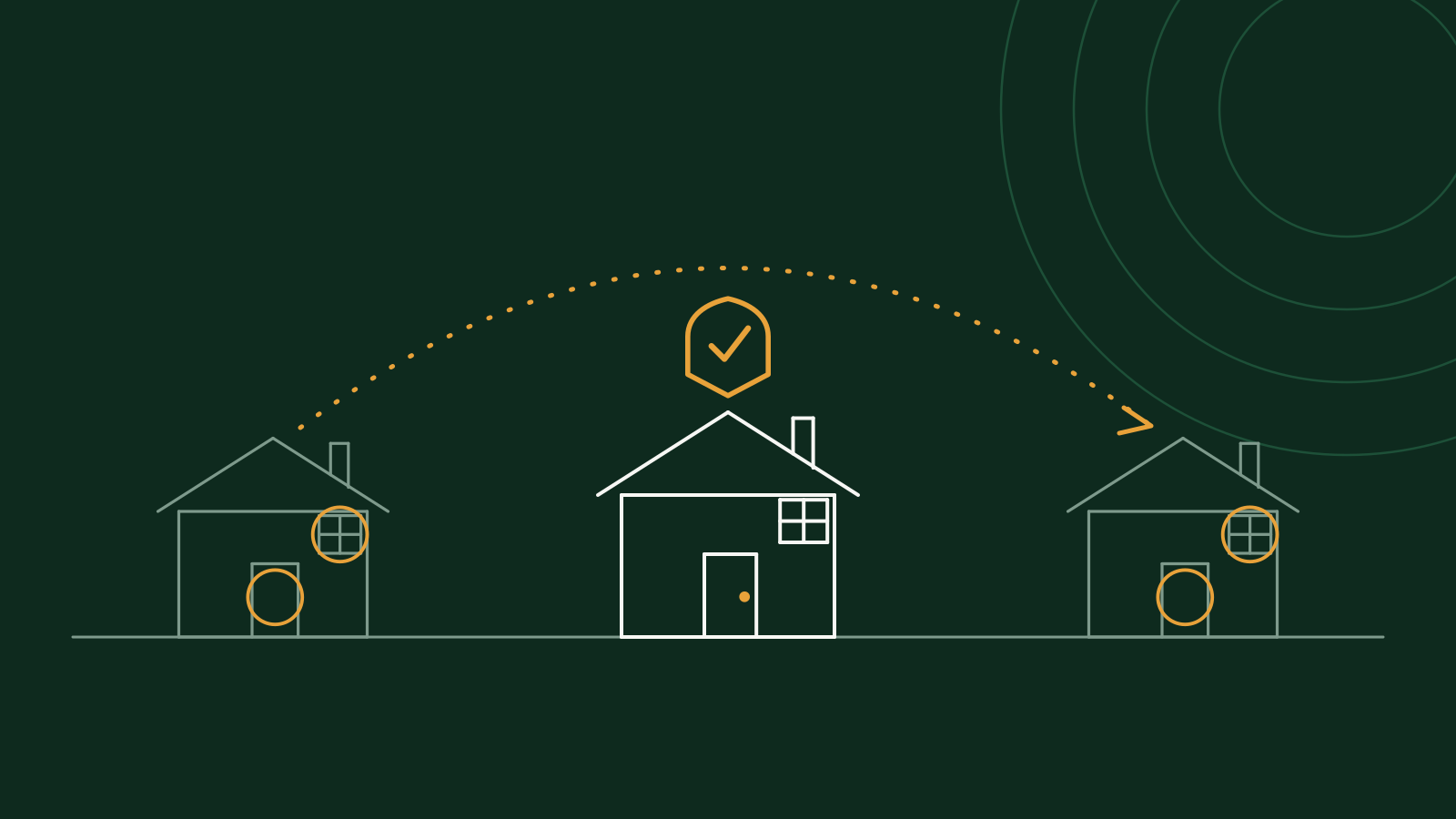
Direct answer: they compare houses on a street and pick the one with the best effort-to-reward ratio. Interviews with convicted burglars, in Australia and overseas, are remarkably consistent: they're not looking for a house to conquer. They're looking for the easy one. Your goal is not to make your home impenetrable — nothing is. Your goal is to make it visibly harder than the house next door. Security professionals sometimes call this target displacement; I call it being the one they skip.
I spent years as an auditor — professionally paid to find the weak points everyone else had signed off on. Walk a suburban street with that eye and you'll see what a burglar sees. Five signals, readable from the footpath:
1. Visibility — can they work unseen?
Dark side paths, high front hedges near the door, no sensor lighting, a porch hidden from the street. Burglars want cover. Anything that means a neighbour or passer-by can't see your entry points is a point in their favour.
2. Access — how do the entries look?
An original sliding door with no track lock. Flimsy flyscreens. A single old lock on a timber door. Louvre or crank windows. They can price your doors and windows from the nature strip.
3. Escape — can they get out fast?
A low fence to a laneway, a side gate that isn't locked, corner blocks with multiple exits. Easy in matters; easy out matters more.
4. Occupancy — does anyone seem home?
Overflowing letterbox, bins left out for days, parcels sitting on the porch, every light off at 7pm, garage visibly empty. Each is a small broadcast that nobody's watching.
5. Reward — does the house hint at what's inside?
Packaging from a new TV on the nature strip. A ladder or tools left out (they'll use your ladder to reach your top window). Cars, deliveries and visible valuables all raise the perceived payoff.
What are the most common entry points in Melbourne homes?
Direct answer: sliding doors, accessible windows, side gates leading to back doors, and garages — in roughly that order.
The sliding door deserves its reputation. Many can be lifted off their track in seconds without breaking glass — silent, fast, and invisible from the street if it's at the rear. Accessible windows come next: not smashed, just tested, because a surprising share are simply unlocked. The side gate isn't an entry itself, but it's the corridor to the least-defended door of the house — the back one — completely out of public view. And the garage is the door people forget: remotes left in cars, internal doors left unlocked, side access never checked.
What security upgrades actually work?
Direct answer: physical barriers and lighting outperform gadgets for the money — track locks, window locks, security-mesh screen doors, locked side gates, and sensor floodlights.
There's an uncomfortable truth in home security: much of what gets sold is electronics, while most break-ins succeed through physical gaps electronics don't close. A camera records a burglary; a track lock prevents one. The honest hierarchy:
Sliding door track locks and window locks — minutes to fit, small cost, and they kill the single most common entry method outright.
Security-mesh screen doors (stainless mesh, not decorative flyscreen) — you keep the breeze, they lose the easy door.
A locked, solid side gate — closes the quiet corridor to your back door.
Sensor floodlights on dark paths and driveways — nothing ends an approach faster than suddenly being lit; solar units need no electrician.
Fence height and anti-climb spikes where fences are easily scaled (possum-safe versions exist and are the right call in Melbourne).
A lockable mailbox and parcel box — identity documents and deliveries are quiet, growing targets.
Do alarms and cameras have a place? Yes — as a layer on top of closed physical gaps, not a substitute for them. And note that in Victoria, alarm and CCTV installation is regulated work for licensed installers.
What can I do this weekend for free?
Direct answer: lock what you own, hide what tempts, and stop broadcasting absence. Tonight: lock every window and the internal garage door, and move the ladder, tools and wheelie bins away from fences and windows. This week: fix the side gate latch, put a cheap timer on one lamp, ask a neighbour to clear your letterbox when you're away, and break down packaging from big purchases so the box isn't kerbside advertising. Total spend: close to zero. Effect: your house just dropped several places down the street's target ranking.
Do dogs, alarms or "beware" signs stop burglars?
Direct answer: they help at the margins, but none replaces closed physical entry points. A dog's noise is a genuine deterrent for some intruders and irrelevant to others. Alarm signage is weakly deterrent because burglars assume many alarms are unmonitored or fake. Cameras deter some opportunists but mostly help after the fact. Every serious study and every burglar interview comes back to the same ranking: time, noise and visibility are what abort break-ins — and physical barriers are what impose all three.
The 10-point weekend checklist
Sliding doors: fit track locks (or a snug dowel today, proper lock this week).
Every accessible window: locked, with keyed locks where practical.
Side gate: solid, locked, not climbable via the bin beside it.
Garage: remote out of the car, internal door locked nightly.
Dark zones: sensor lights on side paths, driveway and rear.
Ladder and tools: locked away, always.
Letterbox: lockable, cleared when away.
Parcels: delivered to a box, a neighbour, or a locker — not the porch.
Front visibility: trim hedges so your door is seen from the street.
Walk your own boundary at night, once — you'll find the weak point in ten minutes.
Frequently asked questions
What time do most break-ins happen? More often during the day than at night — when homes are empty for work and school. Daytime "nobody home" signals matter more than most people think.
Which Melbourne areas are seeing the biggest rises? Victoria's crime data shows strong increases across the east and south-east — including Glen Waverley, Mount Waverley, Doncaster, Box Hill and surrounding suburbs. Check the Crime Statistics Agency Victoria for your suburb's current numbers.
What do burglars steal most? Cash, identity documents, jewellery and small electronics — high value, small size, quickly carried. This is why lockable mailboxes and out-of-sight storage of valuables both matter more than they sound.
Is it worth doing a security check on a rental property? Yes — for landlords, external door locks are also part of Victoria's rental minimum standards, so security and compliance overlap at the front door.
How do I know which fixes my house actually needs? Walk it the way a burglar would: start at the street, look for cover, test every door and window, follow the side path, check the garage. If you'd rather have a trained second pair of eyes, that's exactly what a professional walk-through is for.
Keith is the founder of Safehaus, a Melbourne home security and rental compliance service. A Chartered Accountant and former auditor with a 50+ property portfolio and years of renovation experience, he assesses homes the way an auditor assesses accounts: by finding the weak points everyone else signed off on. Safehaus is police-checked and insured, servicing Melbourne's east and south-east.
Want the weak points found for you? Safehaus offers a free 15-minute home security check across Melbourne's east and south-east — no call-out fee, no obligation. Book at safehaus.com.au/homesecurity or call/text 0451 177 610.