
Car Thieves Have Moved Into Melbourne's East — What the 2026 Data Shows | Safehaus
For years, Victoria's car-theft maps told a familiar story: the CBD, Dandenong, the outer north and west. Not any more. Crime Statistics Agency data this year added a new cluster of hotspots — and it's our side of town: Berwick, Clayton, Malvern East and Glen Waverley have joined the list. Analysts reading the data suggest organised theft networks are deliberately expanding into the eastern suburbs.
If you live out this way, that shift matters more than any headline number. But the headline numbers are worth knowing too.
The numbers behind the headlines
Motor vehicle theft in Victoria has hit record levels — the Crime Statistics Agency recorded more than 31,500 offences in the year to March 2026, and over 11,000 of those cars were taken from homes: driveways, garages, apartment car parks. Victoria Police estimate that around 30 cars a day are now being stolen across the state using electronic key-cloning tools, and the Insurance Council of Australia reports theft-related payouts in Victoria jumped 37 per cent in a year.
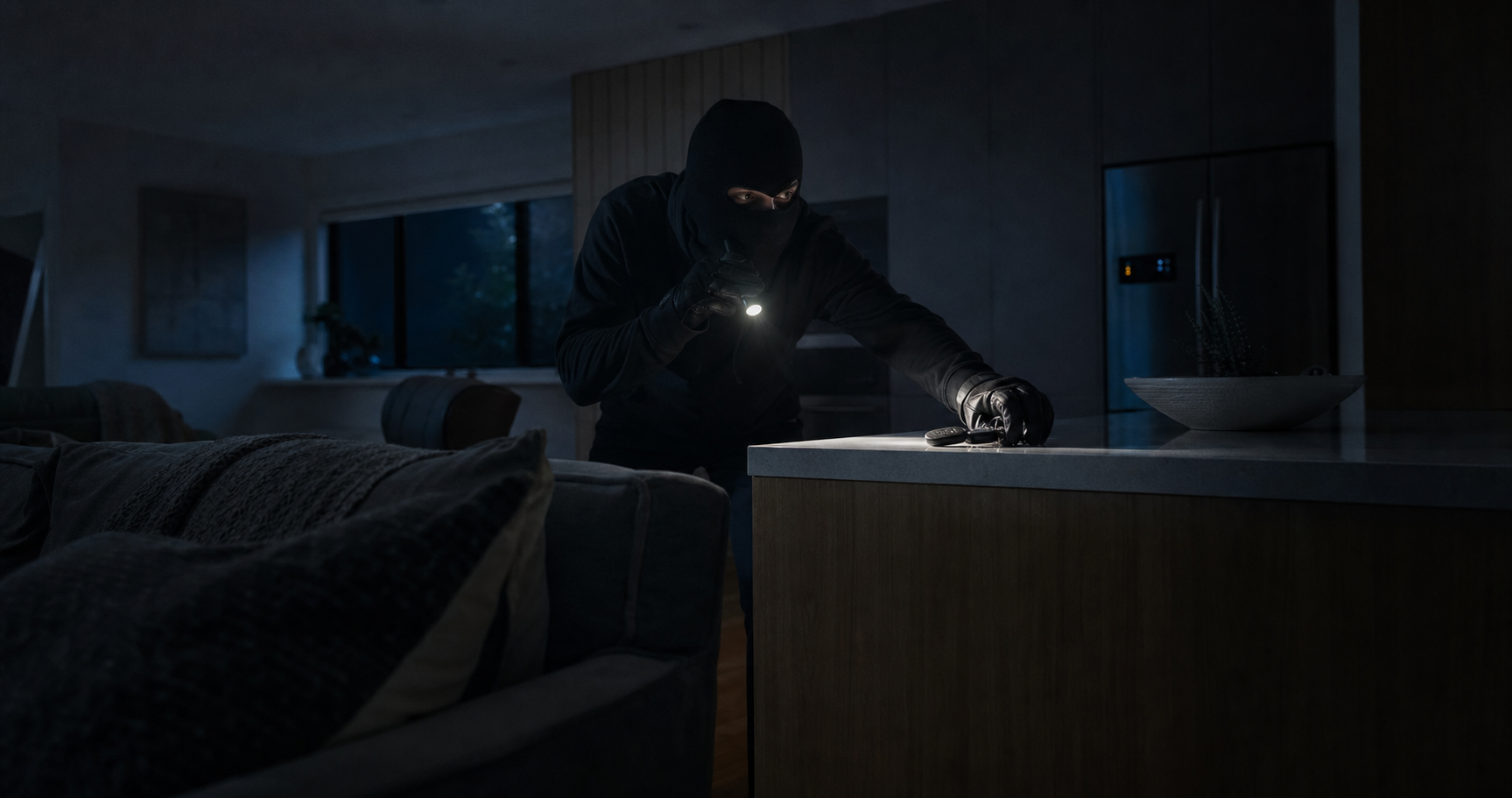
The burglary picture has shifted too. Aggravated burglaries — where someone is home when the intruder enters — now make up around 16 per cent of recorded break-ins, up from about 12 per cent over the longer term. Here's the detail most people miss: council and police briefings note that the overwhelming majority of these involve no confrontation at all. Offenders aren't looking for you. They're sneaking in during the early hours looking for one thing in particular — your car keys on the kitchen bench.
That's the connection between the two crime waves. In a growing share of home break-ins, the house isn't the target. The car in the driveway is.
How they're actually getting in
Forget the crowbar through the window. The methods driving the 2026 numbers are quieter:
Relay attacks — a device reads your keyless fob's signal through the front wall and unlocks the car in the driveway. If your keys live on a hook near the front door, they're within reach without anyone entering.
OBD-port reprogramming — a cheap tool plugged into the diagnostic port under the dash programs a blank key in minutes. Police say roughly one in five stolen vehicles now goes this way, with Toyota LandCruisers, RAV4s, Hiluxes and Corollas among the most-targeted models.
The quiet walk-in — an unlocked side gate, a dark path, a sliding door lifted off its track, keys grabbed, gone. No noise, no broken glass.
What actually works (and costs less than your excess)
The encouraging part of the data: the fixes that defeat these methods are cheap, physical and boring. RACV and Victoria Police recommend the same short list we fit every week:
Signal-blocking pouch for every keyless fob in the house — kills relay theft outright
OBD-port lock — blocks the reprogramming tool
Steering wheel lock — old-fashioned, still the best visible deterrent
Keys away from doors and windows — free, tonight
Lock the side gate, light the dark approaches, bolt the sliding door track — the walk-in route, closed
None of this needs a subscription, an app, or a monitoring contract. It's hardware, fitted once.
Where to start
If you're not sure which of these gaps your home actually has, that's exactly what our free 15-minute security check is for. We walk your home the way someone looking for a way in would — doors, windows, side gate, garage, driveway — and leave you a ranked fix-first list with fixed prices on the spot. Much of it costs little or nothing to close. If your home's already solid, we'll tell you that too.
Prefer to see where you stand first? Take the free 60-second self-check at safehaus.com.au/survey and get your Home Security Score.
Book your free check at safehaus.com.au/homesecurity or call/text 0451 177 610.
Safehaus is a Melbourne-based, owner-operated home security service. Police-checked, fully insured, fixed prices agreed before any work starts. Sources: Crime Statistics Agency Victoria, Victoria Police, RACV, Insurance Council of Australia (2026).